Computational Oncology · Stanford Radiation Oncology

How much of the identity, functional state, and history of cells can we reconstruct from the molecular traces they leave behind?

We build statistical and machine-learning methods that read cell-free DNA, tumor genomes, and tissue images to recover what cells were, what they were doing, and where a cancer is headed, and we translate those readouts into noninvasive tests for detection, response, and residual disease.

Cell-free DNA fragmentomics Bayesian & deep learning Lung cancer · Lymphoma · Liquid biopsy

The central question

What determines whether an emerging or residual cancer is eliminated, remains controlled, or progresses, and can we recognize and change that trajectory?

Every blood draw carries fragments of DNA released by dying cells, tumor and host alike. Their sequence, their breakpoints, and their nucleosome footprints encode where they came from and what state those cells were in. We treat those fragments as a time-stamped record of the cancer–host equilibrium.

  • ClearedNo detectable disease remains after treatment.
  • ControlledDisease persists but is held in check by therapy or immunity.
  • ProgressesResistant clones emerge and the trajectory bends upward.

How we work

Three ways of reading a molecular trace

Identity

Which cell types, tissues, and tumor subtypes shed the fragments we see? We infer cell-of-origin, genotype, and lineage from fragment ends, methylation-independent nucleosome footprints, and sequence.

Functional state

What were those cells doing? EPIC-Seq and its successors reconstruct gene expression, chromatin accessibility, and proliferation from plasma DNA, turning a liquid biopsy into a liquid transcriptome.

History & trajectory

Where has the disease been, and where is it going? Serial measurements, dynamic risk models, and longitudinal multi-omics let us forecast relapse, resistance, and response in time to act.

Research

From fragments to forecasts

All research themes →
Functional state

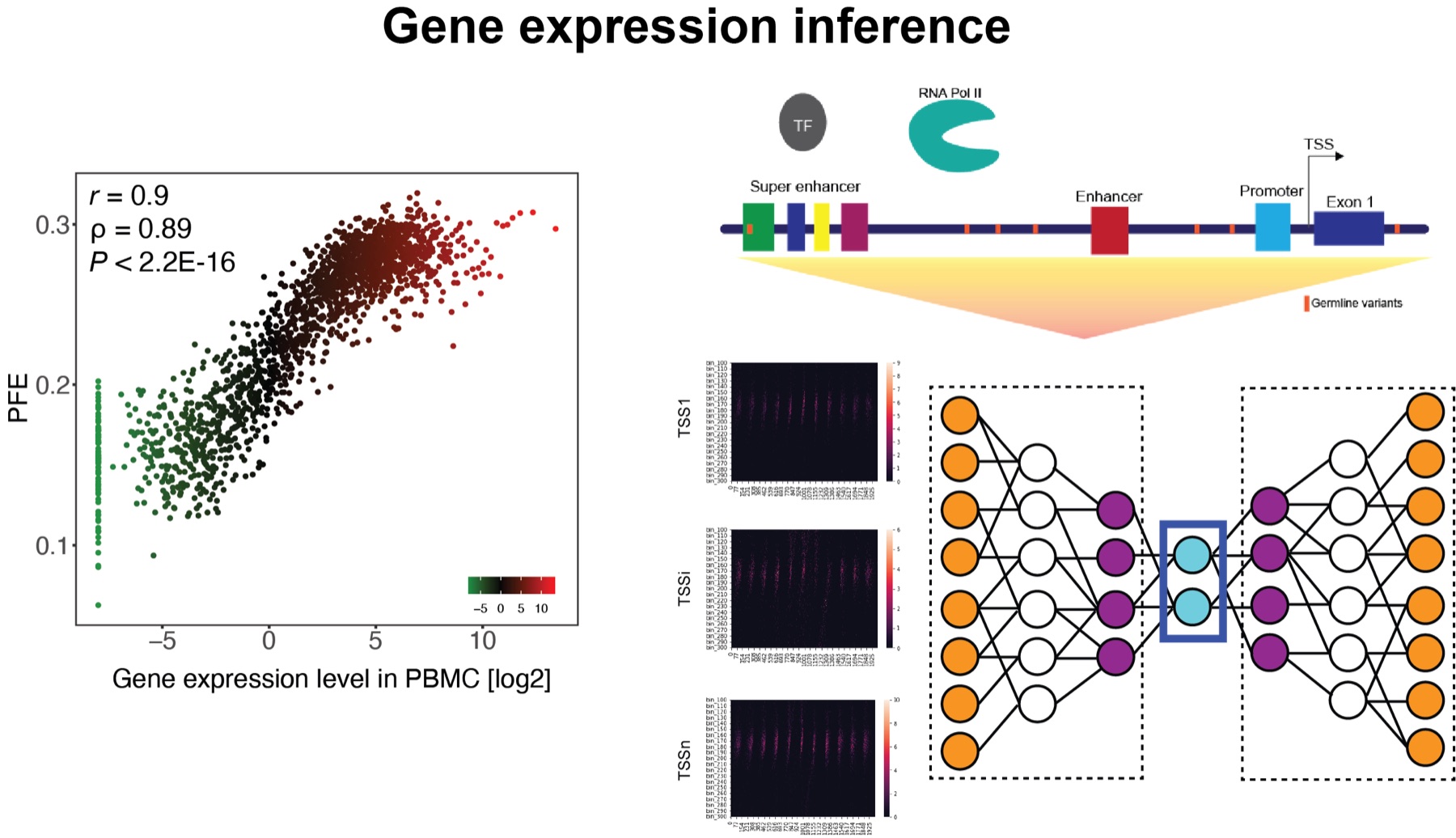
Gene expression inference from cell-free DNA

Nucleosome positioning at promoters, enhancers, and super-enhancers leaves a fragmentation signature in plasma. We model that signature to infer the expression state of the cells that shed the DNA, and extend it from targeted promoters to the whole regulatory genome.

Read more →
Scatter plot of promoter fragmentation entropy against gene expression, and a schematic of regulatory elements feeding a neural network.
Promoter fragmentation entropy tracks gene expression (left); regulatory elements feed a representation-learning model (right).
History & trajectory

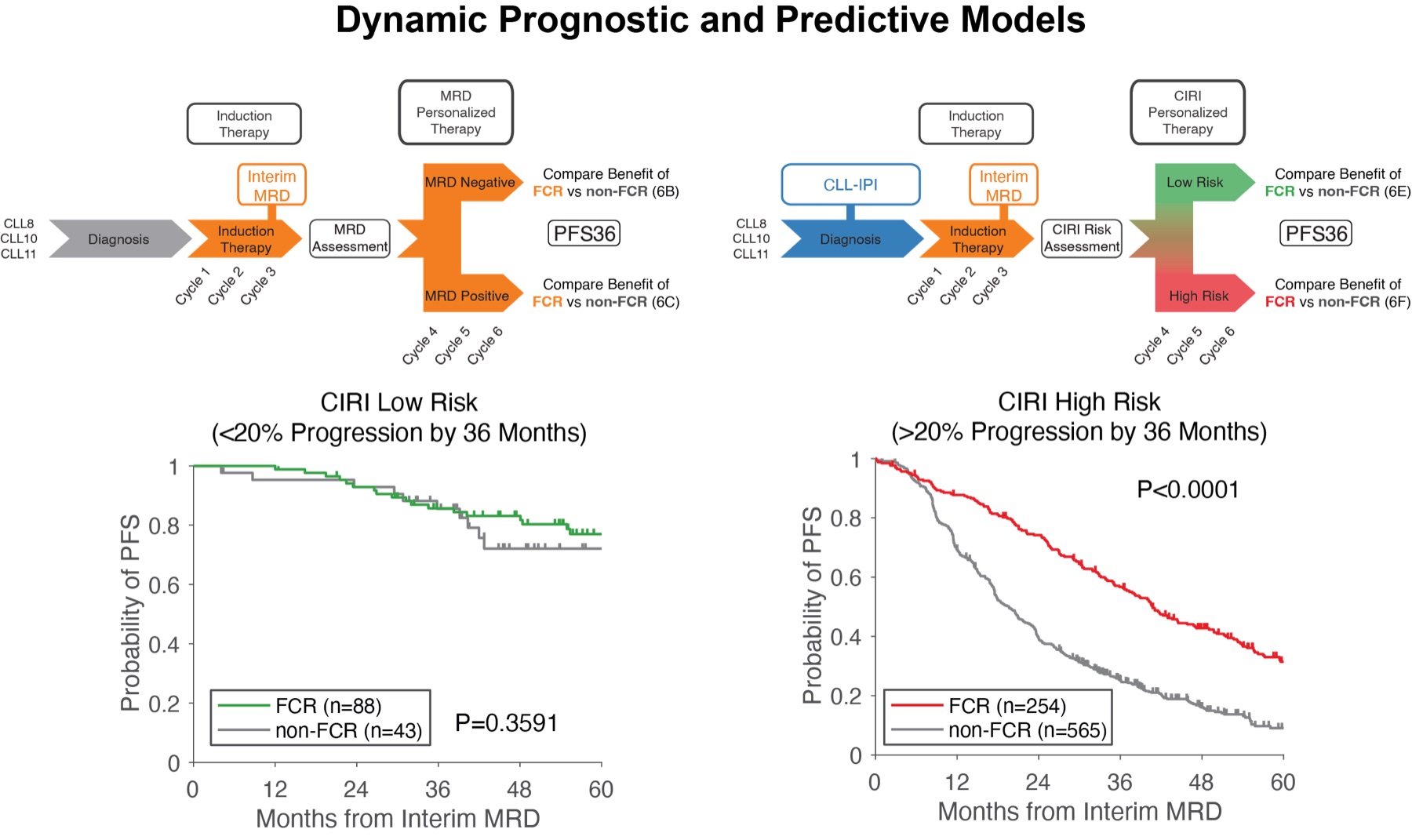
Dynamic prognostic and predictive models

Risk is not fixed at diagnosis. Serial biomarkers, interim MRD, and imaging update a patient's risk continuously. We develop models such as CIRI that integrate these measurements to identify who benefits from a given therapy and when to change course.

Read more →
Treatment schema and survival curves comparing FCR with non-FCR therapy in CIRI low-risk and high-risk CLL patients.
Dynamic risk stratification separates patients who benefit from intensive therapy from those who do not.
Identity

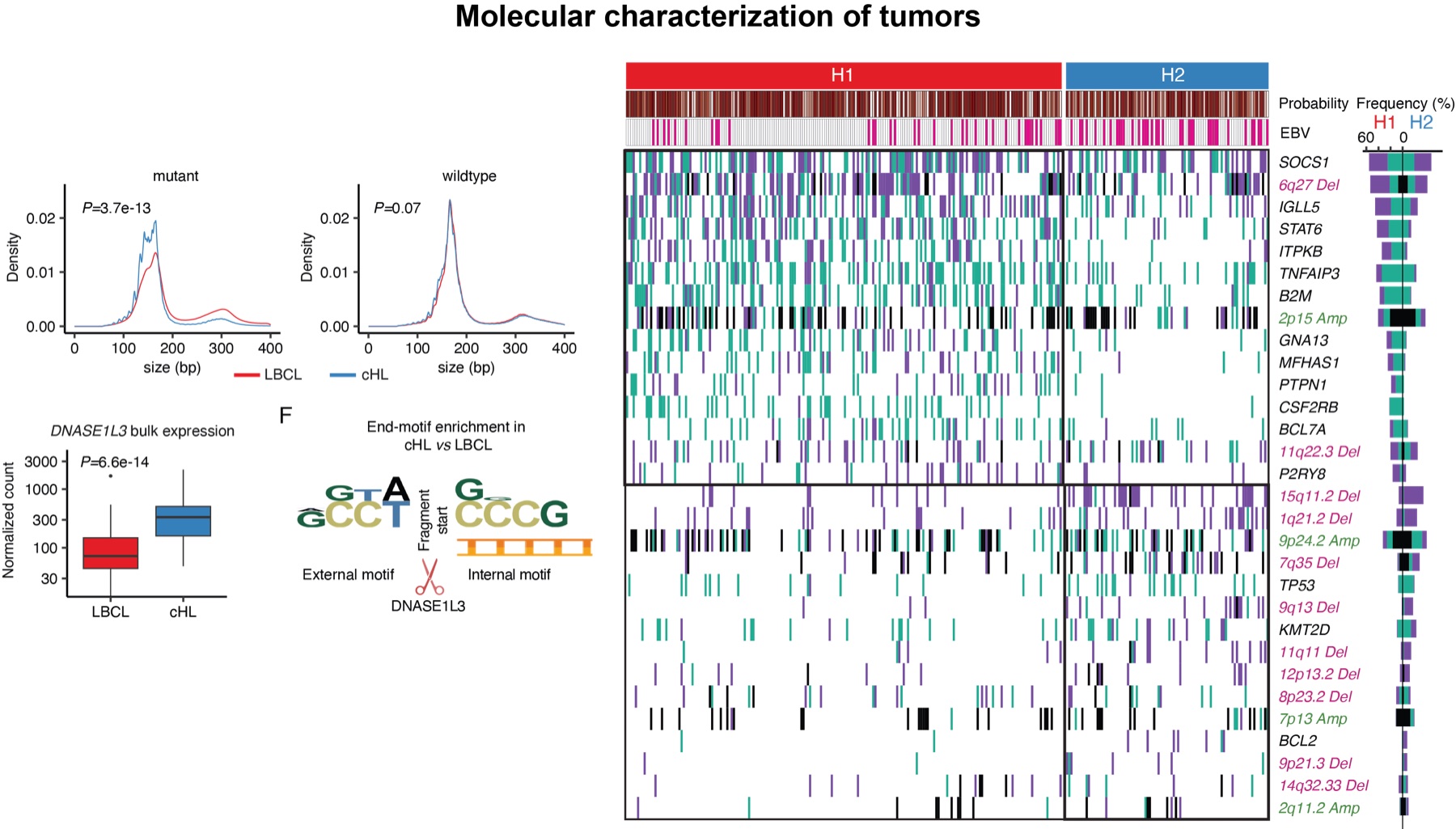
Molecular characterization of tumors and their ecosystems

Noninvasive genotyping, phasing, and fragmentomics define new disease subtypes, as in classic Hodgkin lymphoma, and reveal how tumor cells and their immune neighbors are organized in tissue.

Read more →
Fragment size distributions, DNASE1L3 expression, end-motif logos, and an oncoprint of Hodgkin lymphoma subtypes H1 and H2.
Fragment-size and end-motif biology (left) and the genomic landscape of two Hodgkin lymphoma subtypes (right).

Selected publications

Recent and foundational work

All publications →
Liquid biopsy

Urine cell-free RNA for bladder cancer detection and treatment response prediction

Liu KJ, Shi WY, Nesselbush MC, Phillips NA, Mach KE, Luca B, Bajpai RK, Jabara I, Cheng JC, Sugio T, Shukla N, Shen EC, Koh IL, Wu DJ, Liu CL, Almanza D, Jun S, Tian F, Hamilton EG, Hoerner CR, Wang R, Esfahani MS, Hui A, La V, Holton G, Rodriguez G, Lee TJ, Ling X, Kalahasti N, Vallamkonda S, Mullane P, Chen SB, Shkolyar E, Prado K, Khaki AR, Chan E, Buyyounouski MK, Fan AC, Skinner EC, Alizadeh AA, Liao JC, Diehn M

Nature Medicine · 2026
Liquid biopsy

Field-effect-informed urine liquid biopsy for bladder cancer

Shi WY, Liu KJ, Esfahani MS, Mach KE, Phillips NA, Almanza D, Bajpai RK, Schroers-Martin JG, Trabanino L, Lee TJ, La V, Rodriguez G, Holton G, Chen SB, Mullane P, Wu DJ, Nesselbush MC, Sugio T, Cheng JC, Jabara I, Hamilton EG, Alig SK, Liu CL, Peterson DJ, Prado K, Shkolyar E, Thong A, Shah JB, Gill H, Kunder CA, Chan E, Khaki AR, Skinner EC, Alizadeh AA, Liao JC, Diehn M

Cell · 2026
Dynamic risk

Integrating ctDNA analysis and radiomics for dynamic risk assessment in localized lung cancer

Moding EJ, Shahrokh Esfahani M, Jin C, Hui AB, Nabet BY, Liu Y, Chabon JJ, Binkley MS, Kurtz DM, Hamilton EG, Chaudhuri AA, Liu CL, Li Z, Bonilla RF, Jiang AL, Lau BC, Lopez P, He J, Qiao Y, Xu T, Yao L, Gandhi S, Liao Z, Das M, Ramchandran KJ, Padda SK, Neal JW, Wakelee HA, Gensheimer MF, Loo BW, Li R, Lin SH, Alizadeh AA, Diehn M

Cancer Discovery · 2025
Lymphoma

Distinct Hodgkin lymphoma subtypes defined by noninvasive genomic profiling

Alig SK*, Esfahani MS*, Garofalo A, Li MY, Rossi C, Flerlage T, Flerlage JE, Adams R, Binkley MS, Shukla N, Jin MC, Olsen M, Telenius A, Mutter JA, Schroers-Martin JG, Sworder BJ, Rai S, King DA, Schultz A, Bögeholz J, Su S, Kathuria KR, Liu CL, Kang X, Strohband MJ, Langfitt D, Pobre-Piza KF, Surman S, Tian F, Spina V, Tousseyn T, Buedts L, Hoppe R, Natkunam Y, Fornecker LM, Castellino SM, Advani R, Rossi D, Lynch R, Ghesquières H, Casasnovas O, Kurtz DM, Marks LJ, Link MP, André M, Vandenberghe P, Steidl C, Diehn M, Alizadeh AA

Nature · 2024
Expression inference

Inferring gene expression from cell-free DNA fragmentation profiles

Esfahani MS, Hamilton EG, Mehrmohamadi M, Nabet BY, Alig SK, King DA, Steen CB, Macaulay CW, Schultz A, Nesselbush MC, Soo J, Schroers-Martin JG, Chen B, Binkley MS, Stehr H, Chabon JJ, Sworder BJ, Hui AB, Frank MJ, Moding EJ, Liu CL, Newman AM, Isbell JM, Rudin CM, Li BT, Kurtz DM, Diehn M, Alizadeh AA

Nature Biotechnology · 2022
News

What's happening in the lab

All news →
  • Amirsaman receives an ASH Abstract Achievement Award for J-TRACEAmirsaman has been awarded an ASH Abstract Achievement Award for our J-TRACE abstract, which infers T- and B-cell clonality from comprehensive genomic profil...
  • Alexander Köpp joins the labWe are delighted to welcome Alexander Köpp as a postdoctoral scholar.
  • J-TRACE accepted for a poster presentation at ASH 2026Amirsaman's J-TRACE abstract has been accepted for a poster presentation at the ASH Annual Meeting in December.
  • Amirsaman wins a poster award at the Stanford Bio-X SymposiumAmirsaman received one of the poster awards at this year's Stanford Bio-X Symposium for his presentation of SPARK, our AI framework for imputing genome-wide ...
  • Kopal Tare wins the SIMR best research awardKopal Tare, a Stanford Institutes of Medicine Summer Research (SIMR) student hosted by our lab, received the program's best research award for her summer pro...

Join us

We are hiring a postdoctoral fellow

Computational biologists, statisticians, engineers, and physician-scientists who want to work on the earliest signals of cancer: we would love to hear from you.