Research

Reading the molecular record of cancer and its host

Our work is organized around one question: how much of a cell's identity, functional state, and history survives in the molecules it leaves behind, and what does that record tell us about whether a cancer will be cleared, controlled, or progress? Each theme below attacks a piece of that question.

Functional state

Enhanced gene expression inference from plasma

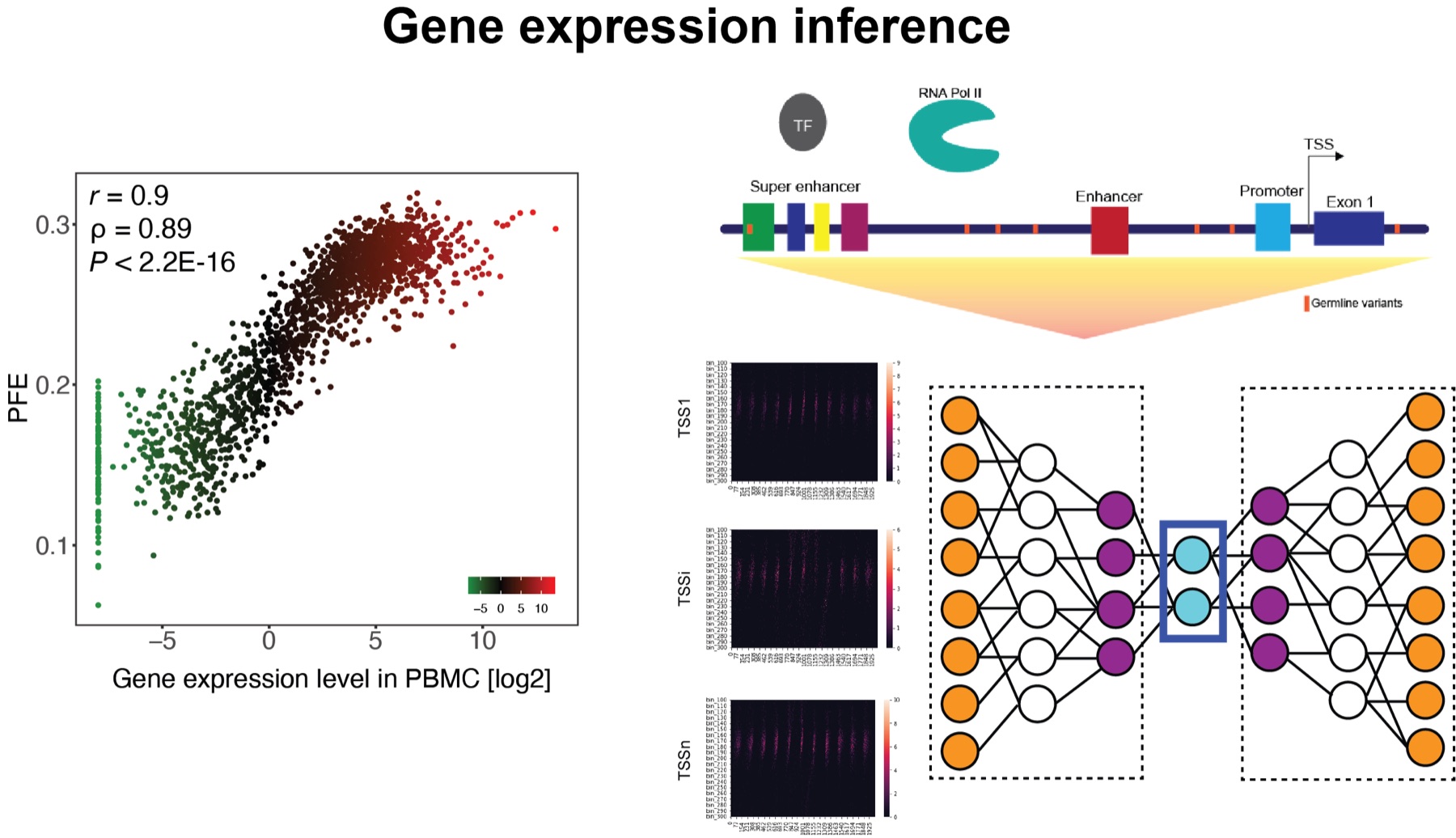
Gene expression and its regulation are a multi-layer process. Most efforts to predict expression from chromatin accessibility and sequence rely on deep models trained on tissue. We push that boundary into the blood: inferring expression from the fragmentation patterns of cell-free DNA at promoters, enhancers, super-enhancers, and transcription-factor binding sites.

  • EPIC-Seq showed that promoter fragmentation entropy tracks gene expression; we are extending the idea genome-wide and to whole-genome sequencing.
  • Representation-learning models that distill expression programs and cell-type composition from low tumor-fraction samples.
  • Information-theoretic limits: how much expression signal can a given depth and tumor fraction support?
EPIC-SeqFragmentomicsDeep learning
Scatter plot of promoter fragmentation entropy against gene expression, and a schematic of regulatory elements feeding a neural network.
Promoter fragmentation entropy (PFE) correlates with expression in PBMCs (r = 0.9). Right: regulatory elements and their fragment coverage feed an autoencoder.
History & trajectory

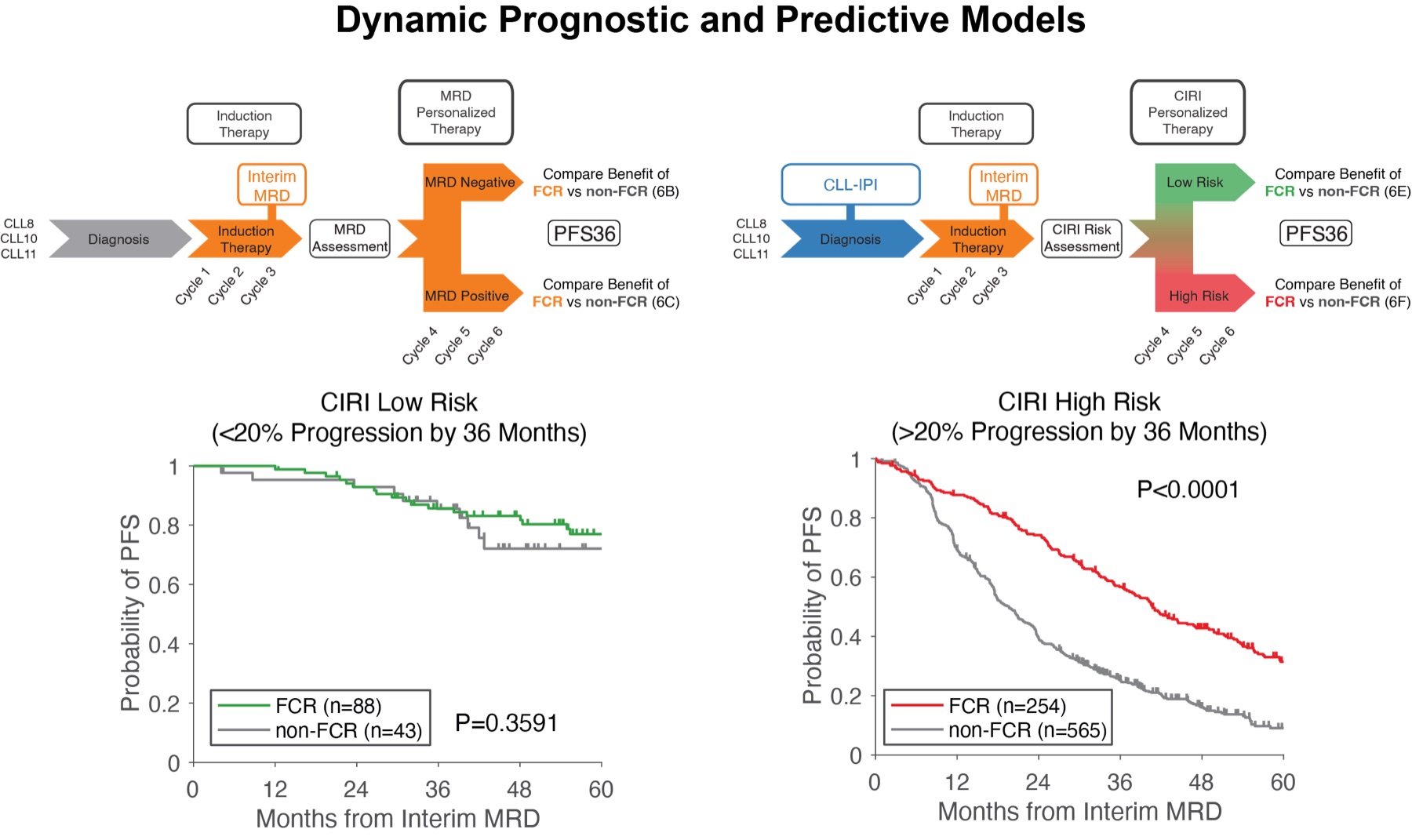
Dynamic prognostic and predictive models

Outcome is shaped by what happens during therapy, not only by what was true at diagnosis. We develop models that update a patient's risk as serial measurements arrive, and that identify who benefits from a given treatment.

  • CIRI, the Continuous Individualized Risk Index, integrates pretreatment features with interim ctDNA and MRD to forecast progression.
  • Multi-scale time-series models for detecting emergent, resistant lesions before they are clinically evident.
  • Combining ctDNA with radiomics for dynamic risk assessment in localized lung cancer.
CIRIMRDLongitudinal modeling
Treatment schema and survival curves comparing FCR with non-FCR therapy in CIRI low-risk and high-risk CLL patients.
In CLL, interim CIRI risk identifies patients for whom FCR chemoimmunotherapy improves progression-free survival (right) and those for whom it does not (left).
Identity

Molecular characterization of tumors and their ecosystems

Reliable genotyping and phenotyping are the foundation of everything else. We develop methods for calling structural variants, single and phased variants, and copy-number changes from noninvasive samples, and for resolving tumor and immune cell states in tissue.

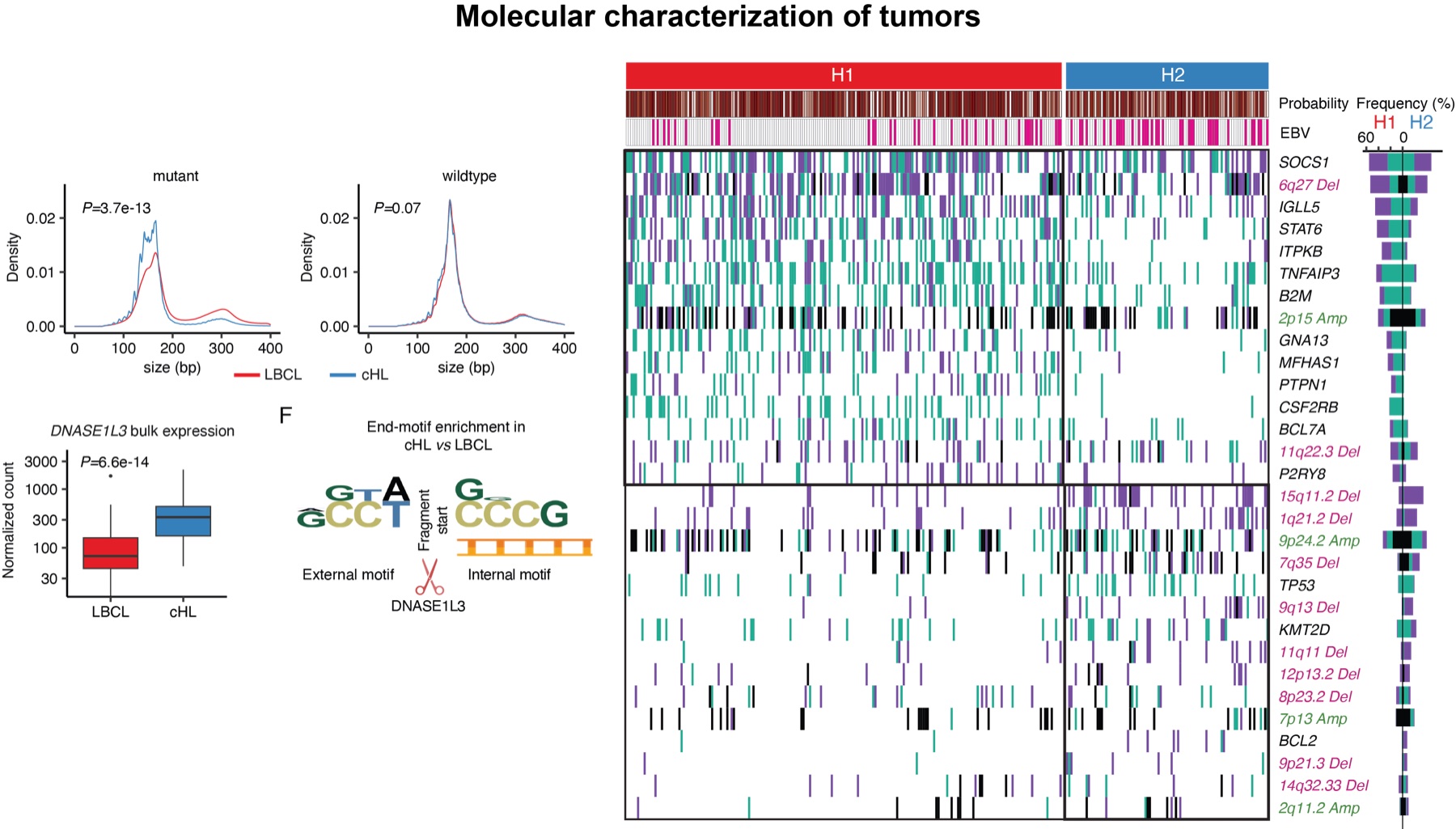
  • Noninvasive genomic profiling defined two subtypes of classic Hodgkin lymphoma, H1 and H2, with distinct biology and outcomes.
  • Fragment-size and end-motif biology, including DNASE1L3 activity, as a readout of the cells and nucleases that shaped each fragment.
  • Single-cell and spatial proteomic analysis of the tumor microenvironment in lymphoma.
Hodgkin lymphomaSmall cell lung cancerSpatial proteomics
Fragment size distributions, DNASE1L3 expression, end-motif logos, and an oncoprint of Hodgkin lymphoma subtypes H1 and H2.
Mutant fragments are shorter in large B-cell lymphoma than in Hodgkin lymphoma (left); genomic landscape of the H1 and H2 subtypes (right).
Response to therapy

Predicting local recurrence after chemoradiation in lung cancer

Nearly half of non-small cell lung cancer patients present with localized disease and are candidates for curative chemoradiotherapy. Roughly 30% of stage III patients nevertheless recur locally, yet radiation is not personalized by tumor biology. We profile cell-free DNA to infer tumor RNA expression and identify determinants of response, so that radiation strategy can be adapted to the tumor in front of us.

NSCLCChemoradiotherapyBiomarkers

Why it matters

Imaging has improved targeting, but no further personalization is done on the basis of tumor biology. A noninvasive readout of the tumor's expression state before and during treatment could guide dose, timing, and the addition of systemic therapy.

Related publications →

Early detection

New signals for the earliest cancers

Traditional liquid biopsy looks for tumor mutations, which may be rare or absent early on. We look for signals that do not depend on knowing the mutation: fragmentation patterns across the regulatory genome, aberrant telomere content, allele-fraction skew at germline SNPs that betrays copy-number change, and mosaic loss of chromosome Y. Integrated with machine learning, these become sensitive tests for nascent tumors and residual disease.

LungPancreaticOvarianMulti-cancer

Signals we study

  • Genome-wide fragmentomics of enhancers and promoters
  • Telomere length dynamics in plasma DNA
  • SNP allele-fraction skew and loss of heterozygosity
  • Mosaic loss of chromosome Y
  • Aging-related signals in cell-free DNA